


Hey there! As a supplier of Titanium Modified Activated Alumina, I often get asked about the shelf life of this awesome product. So, let's dive right in and chat about it.
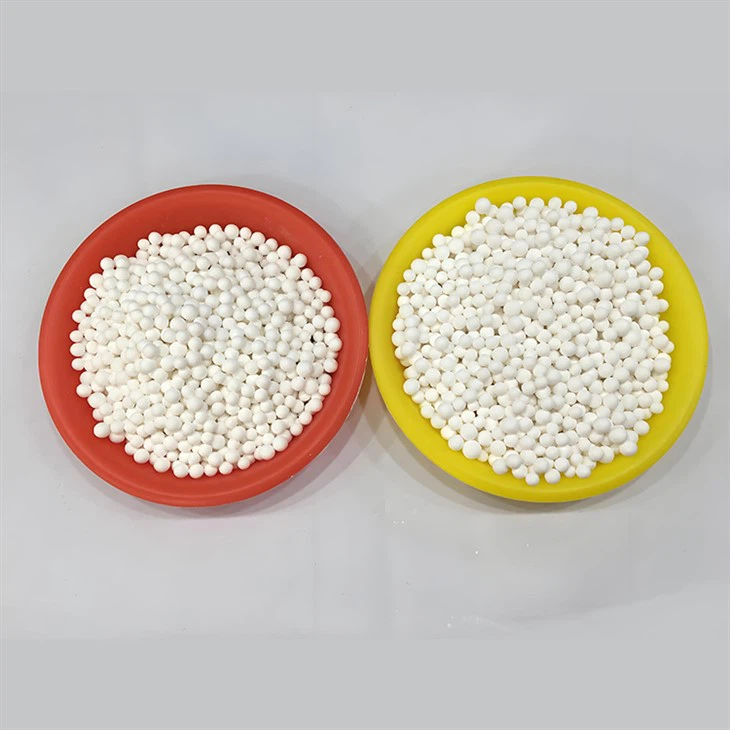
First off, what's Titanium Modified Activated Alumina? Well, it's a super - useful material. It's activated alumina that has been modified with titanium. This modification gives it some really cool properties that make it great for a bunch of different applications. You can use it as a Claus Sulfur Recovery Catalyst Carrier, an Activated Alumina Dehydrogenation Catalyst Carrier, or a CO - MO System Sulfur - tolerant Shift Catalyst Carrier.
Now, back to the main question - what's its shelf life? The shelf life of Titanium Modified Activated Alumina can vary depending on a few factors. One of the biggest factors is how it's stored. If it's stored in the right conditions, it can last a long time.
Storage Conditions
The ideal storage conditions for Titanium Modified Activated Alumina are in a dry, cool place. Moisture is its enemy. When it comes into contact with moisture in the air, it can start to absorb it. This absorption can change its physical and chemical properties over time. For example, if it absorbs too much moisture, it might lose some of its porosity, which is a key feature that makes it so effective as a catalyst carrier.
A temperature - controlled environment is also important. High temperatures can speed up chemical reactions that might degrade the material. So, storing it at a stable, relatively low temperature is a good idea. A warehouse with proper ventilation and humidity control is perfect.
Packaging
The packaging also plays a huge role in determining the shelf life. Good quality, air - tight packaging can keep moisture and other contaminants out. Usually, we use sealed bags or containers made of materials that are resistant to moisture and chemical corrosion. This way, the product inside is protected from the outside environment.
Quality of the Product
The initial quality of the Titanium Modified Activated Alumina matters too. If it's made with high - quality raw materials and a good manufacturing process, it's likely to have a longer shelf life. At our place, we take great care in the production process. We use top - notch activated alumina and the right amount of titanium to ensure a high - quality end product.
Typical Shelf Life
Under optimal storage conditions, Titanium Modified Activated Alumina can have a shelf life of about 2 - 3 years. But this is just an estimate. Some batches might last longer, while others might have a slightly shorter shelf life depending on the factors we talked about earlier.
After the shelf life, the product might still be usable, but its performance might not be as good as before. For example, if it's used as a catalyst carrier, it might not be as effective in promoting chemical reactions. The catalytic activity might decrease, and it might not be able to handle the same reaction conditions as it did when it was fresh.
Testing the Product
To make sure that the product is still good to use, we recommend doing some simple tests. You can check its physical appearance. If it looks clumpy or has changed color, it might be a sign that something's wrong. You can also do some basic chemical tests to check its properties. But if you're not sure, it's always a good idea to consult with us. We have a team of experts who can help you determine if the product is still suitable for your needs.
Impact on Applications
Let's talk a bit about how the shelf life can impact the different applications.
Claus Sulfur Recovery
In the Claus sulfur recovery process, Titanium Modified Activated Alumina is used as a catalyst carrier. If the product is past its shelf life, it might not be able to support the catalyst as effectively. This could lead to a decrease in the sulfur recovery efficiency. The reaction might not proceed as smoothly, and you might end up with lower yields of sulfur.
Dehydrogenation
For dehydrogenation reactions, the activated alumina acts as a support for the dehydrogenation catalyst. An expired product might not provide the right surface area and pore structure for the catalyst. This could result in a lower conversion rate of the reactants and a less efficient overall process.
CO - MO System Sulfur - tolerant Shift
In the CO - MO system sulfur - tolerant shift reaction, the Titanium Modified Activated Alumina helps in the proper functioning of the sulfur - tolerant catalyst. If the product is no longer in good condition, the catalyst might not be able to operate at its best. This could lead to problems in removing sulfur from the gas stream and shifting the carbon monoxide to carbon dioxide.

Monitoring and Maintenance
If you're using Titanium Modified Activated Alumina in your processes, it's a good idea to keep track of the storage time and conditions. Regularly check the packaging for any signs of damage. If you notice any issues, take action right away. You can contact us for advice on whether to replace the product or how to handle it.
Conclusion
So, in a nutshell, the shelf life of Titanium Modified Activated Alumina depends on storage conditions, packaging, and the initial quality of the product. Under good conditions, it can last 2 - 3 years. But it's important to keep an eye on it and test it if you're not sure about its usability.
If you're interested in purchasing Titanium Modified Activated Alumina or have any questions about its shelf life or other aspects, don't hesitate to get in touch with us. We're here to help you make the most of this great product and ensure that it meets your needs.
References
- "Handbook of Catalyst Supports and Supported Catalysts"
- "Catalytic Materials: Principles and Applications"
- Industry reports on activated alumina products


