


Hey everyone,
If you’ve ever worked at a water treatment plant (WTP), you know how messy and high-stakes keeping operations stable can be. One day you’re troubleshooting clogs, the next you’re dealing with off-spec water that could trigger regulatory headaches. Today I want to talk about a workhorse product that flies under the radar but makes or breaks a lot of WTPs’ consistency: the activated alumina defluorination agent. I’m not just here to pitch— I’ve spent years talking to plant operators who’ve seen this stuff turn chaotic, high-maintenance runs into smooth, predictable operations. Let’s break down how this adsorbent impacts everything from downtime to water quality, and why getting the right one matters more than you think.
First, let’s ground this in why defluorination is such a big deal. Fluoride in drinking water is a double-edged sword: a little is good for dental health, but too much causes skeletal issues, dental fluorosis, and all kinds of health problems. Regulators worldwide set strict limits— the US EPA has a maximum contaminant level (MCL) of 4.0 mg/L, and many states go lower. For WTPs, removing excess fluoride isn’t optional, but it’s also not a one-size-fits-all job. A lot of operators rely on activated alumina defluorination agent to pull that extra fluoride out, and how that agent performs directly ties to their plant’s stability.
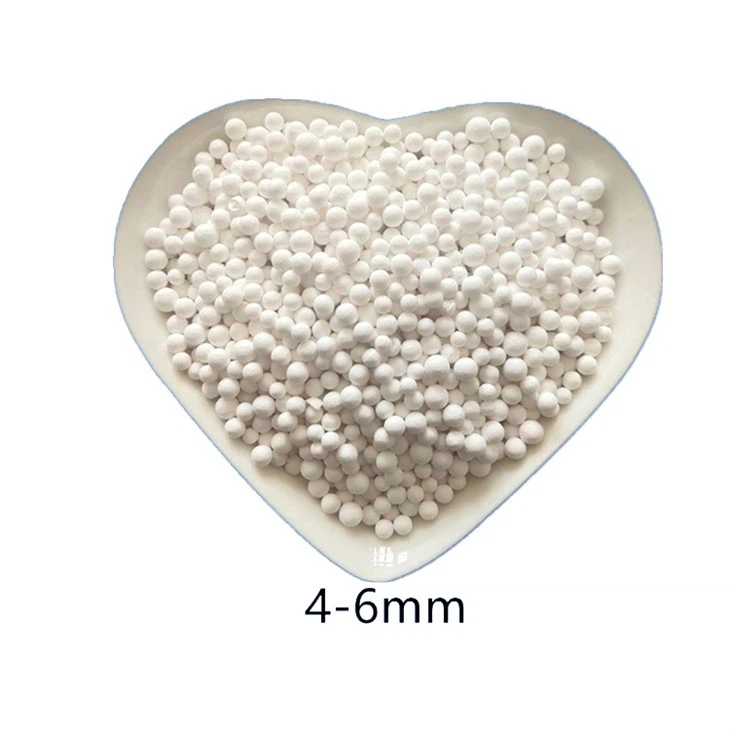
Let’s start with the basics of how this stuff works. Activated alumina is a porous, high-surface-area alumina oxide that acts as an adsorbent— it sticks contaminants to its surface, unlike absorption where they get soaked inside. For fluoride, the chemistry is straightforward: the alumina has positively charged sites that attract negatively charged fluoride ions in water. When those sites get full, you regenerate the alumina with a strong brine solution (usually sodium chloride) to flush out the captured fluoride and recharge the sites. Simple enough in theory, but in practice, this process can make or break a plant’s run time.
I’ve heard horror stories from operators who used cheap, low-grade activated alumina that only lasted a few regeneration cycles before it broke down into fine powder. That powder clogs up filters, backwash cycles get longer, and suddenly you’re dealing with unplanned maintenance every week instead of scheduled regenerations. A WTP I worked with a few years back in the Midwest was running on an inferior agent; they were replacing their media every 6 months and spending 20+ hours a week on extra backwashing and filter replacements. Once they switched to a high-quality activated alumina defluorination agent, their media lasted 3 years, backwashing dropped by 40%, and they only had to shut down for routine checks twice a year. That’s the kind of stability that turns a high-stress job into manageable work.
Wait, but why does the type of activated alumina matter so much here? Not all alumina is built the same. You might’ve heard of other variants like activated alumina balls for hydrogen peroxide or activated alumina PSA adsorbent, but defluorination needs a specific blend of porosity, surface charge, and mechanical strength. If you grab an alumina meant for drying compressed air (like alumina desiccant for air separation, for example) and try to use it for fluoride removal, it’s not going to work— its surface charge isn’t optimized for fluoride ions, so it won’t pull enough contaminant out. Same with alumina adsorbent for liquid crystal, which is designed for very different chemical processes and has a totally different pore structure. Defluorination-specific alumina is engineered to balance high adsorption capacity with resistance to attrition (wearing down) during backwashing and regeneration cycles. That mechanical strength is a huge part of stability: if the alumina crumbles when you pump water through it, you get headloss in the filters, which forces operators to either run at lower flow rates or clean more often. Either way, that’s lost production time and higher costs.
Another big factor in operation stability is how consistent the alumina’s performance is over time. Let’s say you use a batch of alumina that adsorbs 2 mg of fluoride per gram of media in its first month— that’s great. But if that drops to 0.5 mg/g after three regenerations, you’re guessing when to do your next regeneration, instead of having a predictable schedule. Predictability is key for WTPs, because most plants run on tight budgets and fixed staffing. When you can plan regenerations around other maintenance tasks, you avoid last-minute scrambles when fluoride levels spike because your media is spent. A lot of operators I work with track their alumina’s performance over time, and the reliable stuff gives them a clear, linear decline in capacity, so they can schedule out media changes way in advance instead of being caught off guard.
Regeneration is another area where activated alumina defluorination agent impacts stability. If the alumina’s surface is uneven, it can trap fluoride ions in hard-to-reach pores, so the brine regeneration doesn’t flush it all out. That means after a few cycles, those trapped ions take up space that could be used for new fluoride, and your capacity drops faster than it should. High-quality, well-engineered alumina has uniform pores, so regeneration is more efficient, and you get more cycles per batch. One plant operator in Texas told me that using a subpar alumina cut their regeneration efficiency by 30%, so they had to use more brine, spend more time on each cycle, and still ended up with less usable media. Switching to the right defluorination agent fixed all that— they reduced brine usage by 25% and cut regeneration time by 2 hours per cycle, which freed up their operators to work on other projects instead of being tied up on the backwash system.
Let’s also talk about flow dynamics, which are easy to overlook but critical for stability. When activated alumina pellets are the right size and shape, water flows through the filter bed evenly— no channeling, where water takes the path of least resistance and skips parts of the bed, leaving fluoride behind to leak into the effluent. Channeling is a nightmare because it causes inconsistent water quality: one day your effluent is at 1.2 mg/L, the next it’s 4.5 mg/L, and you’re dealing with failed tests. Properly formulated defluorination alumina has uniform particle size distribution, so the filter bed is tight and flow is consistent. That eliminates channeling, keeps effluent quality steady, and reduces the need for post-treatment adjustments that add cost and complexity.
I should mention, though, that no alumina lasts forever. Even the best activated alumina defluorination agent will eventually need replacement, usually after 3-5 years, depending on how often you regenerate and how much fluoride you’re removing. But the key is that the reliable stuff lets you plan that replacement— you don’t have a sudden collapse of media capacity that forces you to order emergency shipments and shut down parts of the plant. That’s the stability everyone wants: being able to anticipate needs, avoid unplanned downtime, and keep your water quality within specs day in and day out.

Wait, I get it— if you’re a small WTP, you might be tempted to go for the cheapest alumina you can find to save a buck. But that’s a false economy. The costs of unplanned downtime, extra backwashing, brine usage, and media replacements add up way more than the extra cost of a quality defluorination agent. Let’s do a quick example: a small WTP treats 1 million gallons a day, needs to remove 2 mg/L of fluoride. Using a cheap alumina that costs $500 per cubic foot and lasts 6 months, plus extra labor for maintenance, you’re looking at ~$12,000 a year in media and extra labor. Switching to a quality defluorination agent that’s $700 per cubic foot, lasts 3 years, cuts maintenance labor by 50%— that’s ~$3,500 a year, way lower total cost, and way less stress. That’s the math that makes operators sit up and take notice.
Another thing I’ve seen: using the wrong alumina can cause secondary issues that mess with the whole plant. For example, if the alumina has a lot of fine particles, they can get carried over into the filtered water, which makes the effluent have higher turbidity. That means you have to run the filtration system longer, or add extra coagulants, which adds cost and can even affect the fluoride removal later. High-quality defluorination alumina is processed to minimize fines, so that carryover is almost zero. No extra turbidity, no extra chemical use, smoother operations all around.
Let’s circle back to why this matters for the whole water treatment process. Stability at the defluorination stage ripples through the entire plant. If your defluorination is consistent, your effluent meets MCLs every time, so you don’t have to waste time on reprocessing or emergency treatments. That frees up your staff to focus on other parts of the plant, like monitoring disinfection, checking pipe integrity, or optimizing chemical dosages, instead of putting out fires from a bad adsorbent. It also makes it easier to pass regulatory inspections— inspectors hate inconsistent data, so if your fluoride levels are steady, you’re way less likely to get flagged.
I know a lot of operators are busy, so I’ll wrap this up with the biggest takeaway: the activated alumina defluorination agent you choose isn’t just a commodity part of your WTP— it’s a core component of your operational stability. Don’t waste time or money on generic alumina that’s meant for other jobs (like the hydrogen peroxide or PSA variants I mentioned earlier, or air separation desiccants) or low-quality stuff that falls apart fast. Investing in a defluorination-specific alumina means fewer unplanned shutdowns, lower maintenance costs, more consistent water quality, and a whole lot less stress for your team.
If you’re looking for a defluorination agent that’s engineered for performance and built to keep your plant running smoothly, check out the activated alumina defluorination agent that’s designed to deliver those consistent results. We also have other alumina solutions if you need them— like activated alumina balls for hydrogen peroxide, activated alumina PSA adsorbent, alumina adsorbent for liquid crystal, and alumina desiccant for air separation— but when it comes to fluoride removal, sticking to the right specialized product is key.
If you’re tired of dealing with unstable defluorination performance or constant maintenance headaches, reach out to us to chat about your specific plant needs. We can help you figure out the right alumina solution to make your operations more reliable and cost-effective.
References:
- U.S. Environmental Protection Agency. (2023). National Primary Drinking Water Regulations: Fluoride. EPA 810-F-23-002.
- American Water Works Association. (2021). Water Treatment Plant Operation, 5th ed. AWWA Press.
- Zhang, L., et al. (2020). “Performance of Activated Alumina for Fluoride Removal in Full-Scale Water Treatment Plants.” Journal of Environmental Engineering, vol. 146, no. 8.
- World Health Organization. (2022). Guidelines for Drinking-Water Quality, 4th ed. Update. WHO Press.
- Miller, T., et al. (2019). “Attrition and Regeneration Efficiency of Activated Alumina Defluorination Media.” Water Research, vol. 158, pp. 124-132.


