


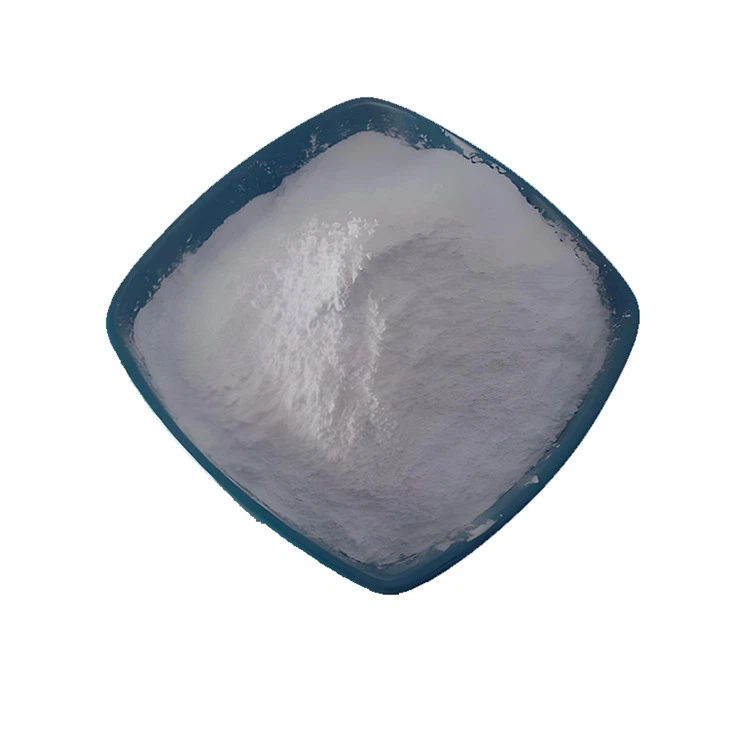
Hey there! As an aluminium hydroxide supplier, I'm super stoked to dive into how this nifty compound plays a huge role in the production of foaming agents. Aluminium hydroxide, often known as alumina trihydrate or ATH, is a white, powdery substance that's not only abundant but also has some pretty cool properties that make it a top - pick for foaming agent production.
Let's first understand what foaming agents are. Foaming agents are substances that can create and stabilize bubbles in a liquid or solid matrix. They're used in a wide range of industries, from construction to food, and aluminium hydroxide has found its way into many of these applications.
One of the key properties of aluminium hydroxide that makes it useful in foaming agents is its endothermic decomposition. When heated, aluminium hydroxide breaks down into alumina and water vapor. This reaction absorbs a significant amount of heat, which is crucial in many foaming processes. For example, in the production of fire - retardant foams, this endothermic reaction helps to cool the surrounding area and prevent the spread of fire. The water vapor released during decomposition also acts as a diluent, reducing the concentration of flammable gases in the vicinity.
In the polymer industry, aluminium hydroxide is often added to polymers to create foamed plastics. When the polymer is heated during the foaming process, the aluminium hydroxide decomposes. The water vapor generated creates bubbles within the polymer matrix, resulting in a foamed structure. This not only reduces the weight of the final product but also improves its insulation properties. For instance, in the production of insulation materials for buildings, foamed polymers with aluminium hydroxide can provide better thermal insulation compared to non - foamed counterparts.
Now, let's talk about the types of foaming agents where aluminium hydroxide is commonly used.

Chemical Foaming Agents
Chemical foaming agents work by undergoing a chemical reaction when heated, releasing a gas that forms bubbles. Aluminium hydroxide can be used as a part of these chemical foaming systems. In some cases, it can act as a co - foaming agent, enhancing the foaming efficiency of other chemicals. For example, when combined with azodicarbonamide, a common chemical foaming agent, aluminium hydroxide can help to control the rate of gas release and the size of the bubbles formed. This results in a more uniform and fine - celled foam structure.
Physical Foaming Agents
Physical foaming agents rely on the phase change of a substance to create bubbles. Aluminium hydroxide can indirectly affect the performance of physical foaming agents. In a polymer melt, the presence of aluminium hydroxide particles can influence the viscosity and surface tension of the melt. This, in turn, affects the nucleation and growth of bubbles formed by physical foaming agents such as carbon dioxide or nitrogen. By adjusting the amount and particle size of aluminium hydroxide, manufacturers can optimize the foaming process and the properties of the final foam.
The particle size of aluminium hydroxide also plays a crucial role in foaming agent production. Finer particles generally provide better dispersion in the matrix, leading to more uniform bubble formation. They also have a larger surface area, which can enhance the endothermic decomposition reaction. On the other hand, coarser particles may be used in some applications where a more open - celled foam structure is desired.
Another aspect to consider is the purity of aluminium hydroxide. High - purity aluminium hydroxide is often preferred in applications where the quality and performance of the foaming agent are critical. Impurities can affect the decomposition temperature and the quality of the foam produced. For example, in the production of high - end insulation foams for aerospace applications, only the purest aluminium hydroxide is used to ensure consistent performance.
Now, let's take a look at some specific industries where aluminium hydroxide - based foaming agents are widely used.
Construction Industry
In the construction industry, foamed concrete is a popular material. Aluminium hydroxide can be added to the concrete mix to create a lightweight and insulating foam. The foamed concrete has better thermal and acoustic insulation properties compared to traditional concrete. It's also easier to handle and transport due to its lower weight. Additionally, the fire - retardant properties of aluminium hydroxide make the foamed concrete a safer choice for building structures.
Automotive Industry
The automotive industry uses foamed materials for various applications, such as seat cushions, insulation, and soundproofing. Aluminium hydroxide - based foaming agents can help to produce foams with the right density, elasticity, and fire - resistance. For example, in the production of automotive interior foams, the endothermic decomposition of aluminium hydroxide can provide an extra layer of fire protection in case of an accident.
Rubber Industry
In the rubber industry, Aluminum Hydroxide for Rubber is used to create foamed rubber products. Foamed rubber has applications in gaskets, seals, and vibration dampers. The addition of aluminium hydroxide not only helps in the foaming process but also improves the fire - retardant and mechanical properties of the rubber. The foamed structure allows for better flexibility and shock absorption, making it suitable for these applications.
Cable Industry
The Aluminum Hydroxide for Cable is used in the production of cable insulation foams. These foams need to have good electrical insulation properties as well as fire - retardancy. Aluminium hydroxide helps to achieve both. The foamed insulation reduces the weight of the cable and improves its flexibility, while the fire - retardant properties protect the cable from damage in case of a fire.
Composite Insulator Industry
In the Composite Insulator Industry, foaming agents with aluminium hydroxide are used to create lightweight and high - performance insulators. The foamed structure provides better mechanical strength and electrical insulation compared to non - foamed insulators. The endothermic decomposition of aluminium hydroxide also helps to protect the insulator from overheating and damage during electrical arcing.
As an aluminium hydroxide supplier, I understand the importance of providing high - quality products for the production of foaming agents. We offer a wide range of aluminium hydroxide grades with different particle sizes and purities to meet the diverse needs of our customers. Whether you're in the polymer, construction, automotive, or any other industry that uses foaming agents, we can provide the right aluminium hydroxide for your application.
If you're interested in learning more about how our aluminium hydroxide can be used in your foaming agent production or if you want to discuss a specific project, I'd love to hear from you. Feel free to reach out and start a conversation. We can work together to find the best solution for your foaming needs.
References
- "Handbook of Polymer Foams and Foam Technology" by D. Klempner and K. C. Frisch
- "Fire Retardancy of Polymeric Materials" by Charles A. Wilkie
- "Polymer Foams: Science and Technology" by L. A. Utracki


