


As a leading supplier of alumina catalyst carriers, I am often asked about the performance of these carriers in liquid-phase reactions. In this blog post, I will delve into the intricacies of how alumina catalyst carriers behave in liquid-phase reactions, exploring their properties, advantages, and applications.
Properties of Alumina Catalyst Carriers
Alumina is a versatile material that offers several key properties that make it an ideal choice for catalyst carriers in liquid-phase reactions. One of the most important properties of alumina is its high surface area. A high surface area provides more active sites for the catalyst to interact with the reactants, which can enhance the reaction rate and selectivity. Additionally, alumina has good thermal stability, which allows it to withstand the high temperatures often encountered in liquid-phase reactions without significant degradation.
Another important property of alumina is its porosity. The pore structure of alumina can be tailored to meet the specific needs of different reactions. For example, a carrier with a large pore size may be suitable for reactions involving large molecules, while a carrier with a small pore size may be more appropriate for reactions involving small molecules. The porosity of alumina also affects the diffusion of reactants and products within the catalyst, which can impact the reaction kinetics.
Advantages of Alumina Catalyst Carriers in Liquid-Phase Reactions
There are several advantages to using alumina catalyst carriers in liquid-phase reactions. Firstly, alumina is a chemically inert material, which means that it does not react with the reactants or products of the reaction. This inertness helps to maintain the purity of the reaction system and reduces the likelihood of side reactions.
Secondly, alumina has a high mechanical strength, which allows it to withstand the physical stresses associated with liquid-phase reactions. This is particularly important in continuous flow reactors, where the catalyst carrier may be subjected to high pressures and flow rates. The high mechanical strength of alumina ensures that the carrier remains intact and does not break down, which can lead to catalyst deactivation and reactor fouling.
Thirdly, alumina can be easily modified to enhance its catalytic performance. For example, it can be doped with various metals or metal oxides to introduce specific catalytic activity. These modifications can improve the selectivity, activity, and stability of the catalyst, making it more efficient for the desired reaction.
Applications of Alumina Catalyst Carriers in Liquid-Phase Reactions
Alumina catalyst carriers find applications in a wide range of liquid-phase reactions across various industries. One of the most common applications is in the petrochemical industry, where alumina carriers are used in the production of fuels and chemicals. For example, Claus Sulfur Recovery Catalyst Carrier is used in the Claus process to recover sulfur from hydrogen sulfide-containing gases. The alumina carrier provides a high surface area for the deposition of the active catalyst, which helps to convert hydrogen sulfide into elemental sulfur.
In the environmental industry, Potassium Permanganate Alumina Adsorbent Ball is used for the removal of pollutants from wastewater. The potassium permanganate supported on the alumina carrier acts as an oxidizing agent, which can oxidize organic and inorganic pollutants in the water. The high surface area and porosity of the alumina carrier allow for efficient contact between the adsorbent and the pollutants, resulting in effective removal.
In the chemical industry, Organic Sulfur Hydrogenation Catalyst Carrier is used in the hydrogenation of organic sulfur compounds. The alumina carrier provides a stable support for the active metal catalyst, which helps to break the carbon-sulfur bonds in the organic sulfur compounds and convert them into hydrogen sulfide. This process is important for the desulfurization of fuels and the production of clean chemicals.
Titanium Modified Activated Alumina is also used in various liquid-phase reactions, such as oxidation and reduction reactions. The titanium modification can improve the catalytic activity and selectivity of the alumina carrier, making it more suitable for specific reactions.
In the synthesis gas industry, CO - MO System Sulfur-tolerant Shift Catalyst Carrier is used in the water-gas shift reaction to convert carbon monoxide and water into hydrogen and carbon dioxide. The alumina carrier provides a high surface area and good thermal stability for the CO - MO system catalyst, which can operate in the presence of sulfur-containing gases without significant deactivation.
Factors Affecting the Performance of Alumina Catalyst Carriers in Liquid-Phase Reactions
Several factors can affect the performance of alumina catalyst carriers in liquid-phase reactions. One of the most important factors is the nature of the reactants and products. Different reactants and products have different chemical properties, such as solubility, reactivity, and molecular size. These properties can influence the interaction between the reactants and the catalyst, as well as the diffusion of the reactants and products within the catalyst carrier.
The reaction conditions, such as temperature, pressure, and reaction time, also play a crucial role in the performance of the alumina catalyst carrier. Higher temperatures can increase the reaction rate, but they may also cause thermal degradation of the catalyst carrier. Similarly, higher pressures can improve the solubility of the reactants and enhance the reaction rate, but they may also require more robust reactor materials and equipment.
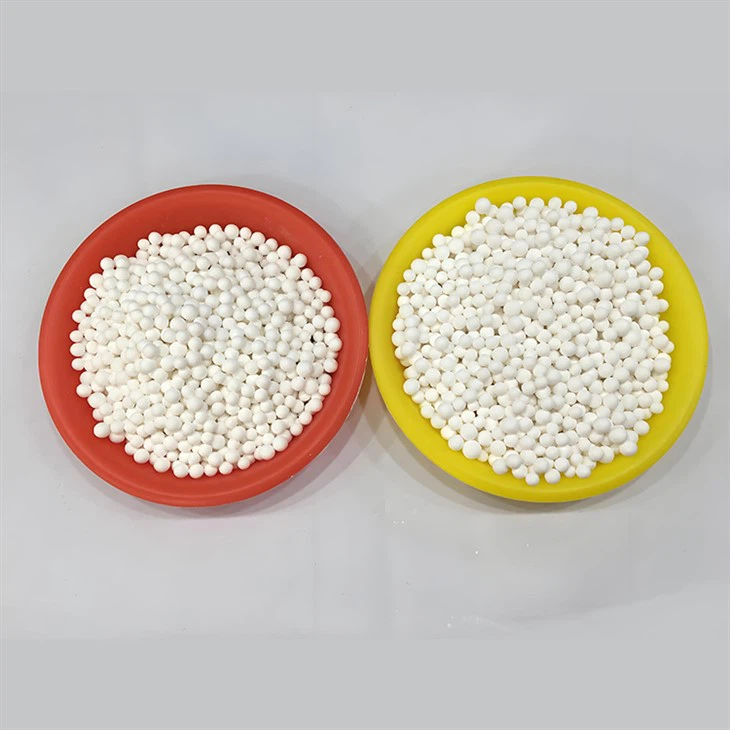

The choice of the active catalyst supported on the alumina carrier is another important factor. Different active catalysts have different catalytic activities and selectivities for different reactions. The loading of the active catalyst on the alumina carrier also affects the performance of the catalyst. A higher loading of the active catalyst can increase the catalytic activity, but it may also lead to agglomeration of the catalyst particles and a decrease in the surface area.
How to Optimize the Performance of Alumina Catalyst Carriers in Liquid-Phase Reactions
To optimize the performance of alumina catalyst carriers in liquid-phase reactions, several strategies can be employed. Firstly, the pore structure of the alumina carrier can be optimized to match the size and diffusion characteristics of the reactants and products. This can be achieved by controlling the synthesis conditions of the alumina, such as the type of precursor, the pH of the solution, and the calcination temperature.
Secondly, the surface properties of the alumina carrier can be modified to enhance the interaction between the reactants and the catalyst. This can be done by functionalizing the surface of the alumina with specific groups or by doping the alumina with metal ions. These modifications can improve the adsorption of the reactants on the catalyst surface and enhance the catalytic activity.
Thirdly, the reaction conditions can be optimized to ensure the efficient operation of the catalyst. This includes selecting the appropriate temperature, pressure, and reaction time, as well as controlling the flow rate and the concentration of the reactants. By carefully adjusting these parameters, the reaction rate and selectivity can be maximized, while minimizing the formation of by-products and catalyst deactivation.
Conclusion
In conclusion, alumina catalyst carriers offer several advantages in liquid-phase reactions, including high surface area, good thermal stability, chemical inertness, and high mechanical strength. They are widely used in various industries for a range of applications, such as petrochemical production, environmental protection, and chemical synthesis. However, the performance of alumina catalyst carriers in liquid-phase reactions is affected by several factors, including the nature of the reactants and products, the reaction conditions, and the choice of the active catalyst. By optimizing the properties of the alumina carrier and the reaction conditions, the performance of the catalyst can be significantly improved.
If you are interested in learning more about our alumina catalyst carriers or are looking for a reliable supplier for your liquid-phase reaction needs, please feel free to reach out to us for a procurement discussion. We are committed to providing high-quality products and excellent customer service to meet your specific requirements.
References
- Smith, J. (2018). Catalysis in Liquid-Phase Reactions. Chemical Reviews, 118(23), 11234 - 11260.
- Jones, A. et al. (2019). The Role of Alumina in Catalyst Supports for Liquid-Phase Applications. Journal of Catalysis, 376, 123 - 135.
- Brown, C. (2020). Advances in the Design of Alumina Catalyst Carriers for Liquid-Phase Reactions. Catalysis Today, 350, 234 - 246.


