


Hey there! As a supplier of Aluminum Hydroxide Filler, I've seen firsthand how this stuff can make a real difference in the world of polymers. Today, I want to chat about how Aluminum Hydroxide Filler affects the flexural strength of polymers.
First off, let's talk a bit about what flexural strength is. Flexural strength is basically the ability of a material to resist deformation under bending. In the polymer world, it's a super important property. Polymers are used in all sorts of applications, from automotive parts to consumer goods, and having good flexural strength can mean the difference between a product that lasts and one that breaks easily.
So, how does Aluminum Hydroxide Filler come into play? Well, Aluminum Hydroxide Filler is a popular additive for polymers for several reasons. One of the main reasons is its ability to improve the mechanical properties of polymers, including flexural strength.
When you add Aluminum Hydroxide Filler to a polymer, it acts as a reinforcement. Think of it like adding steel bars to concrete. The filler particles distribute the stress more evenly throughout the polymer matrix, which helps to prevent cracks from forming and spreading. This, in turn, increases the flexural strength of the polymer.
But it's not just about adding any old filler. The properties of the Aluminum Hydroxide Filler, such as its particle size, shape, and surface area, can have a big impact on how it affects the flexural strength of the polymer. For example, smaller particle sizes generally lead to better dispersion in the polymer matrix, which can result in a more uniform distribution of stress and higher flexural strength.
Another factor to consider is the loading level of the filler. In general, increasing the amount of Aluminum Hydroxide Filler in the polymer can increase the flexural strength up to a certain point. However, if you add too much filler, it can start to have a negative effect. The excess filler can cause agglomeration, which can lead to weak spots in the polymer and a decrease in flexural strength.
Now, let's take a look at some specific applications where the flexural strength of polymers is crucial.
In the rubber industry, polymers need to have good flexural strength to withstand the constant bending and stretching they experience. Aluminum Hydroxide for Rubber is often used as a filler to improve the mechanical properties of rubber compounds. By adding Aluminum Hydroxide Filler, the rubber can have better resistance to flex fatigue, which means it can last longer and perform better in applications like tires and seals.
In the field of flame retardancy, polymers also need to have good flexural strength. Aluminum Hydroxide Flame Retardant is not only used to make polymers more fire-resistant but also to enhance their mechanical properties. When a polymer is exposed to fire, it can undergo significant thermal and mechanical stress. By improving the flexural strength with Aluminum Hydroxide Filler, the polymer can maintain its structural integrity better during a fire.
Composite insulators are another application where the flexural strength of polymers is important. These insulators are used in electrical power systems to support and insulate high-voltage conductors. Aluminum Hydroxide for Composite Insulator can be added to the polymer matrix to improve its flexural strength, which helps the insulator to withstand the mechanical loads and environmental stresses it is exposed to.
But how do we know for sure that Aluminum Hydroxide Filler is having the desired effect on the flexural strength of polymers? Well, there are several testing methods that can be used. One common method is the three-point bending test. In this test, a polymer sample is placed on two supports and a load is applied at the center. The flexural strength is then calculated based on the maximum load the sample can withstand before breaking.
Another method is the four-point bending test, which is similar to the three-point bending test but applies the load at two points instead of one. This test can provide more information about the behavior of the polymer under different loading conditions.
In addition to these mechanical tests, other techniques such as microscopy and spectroscopy can be used to study the structure and properties of the polymer-filler composite. These techniques can help us to understand how the filler is interacting with the polymer and how it is affecting the flexural strength.
As a supplier of Aluminum Hydroxide Filler, I'm always looking for ways to help my customers get the best results. That's why I offer a range of different grades of Aluminum Hydroxide Filler with varying particle sizes, shapes, and surface treatments. By working closely with my customers, I can recommend the right filler for their specific application and help them optimize the loading level to achieve the desired flexural strength.
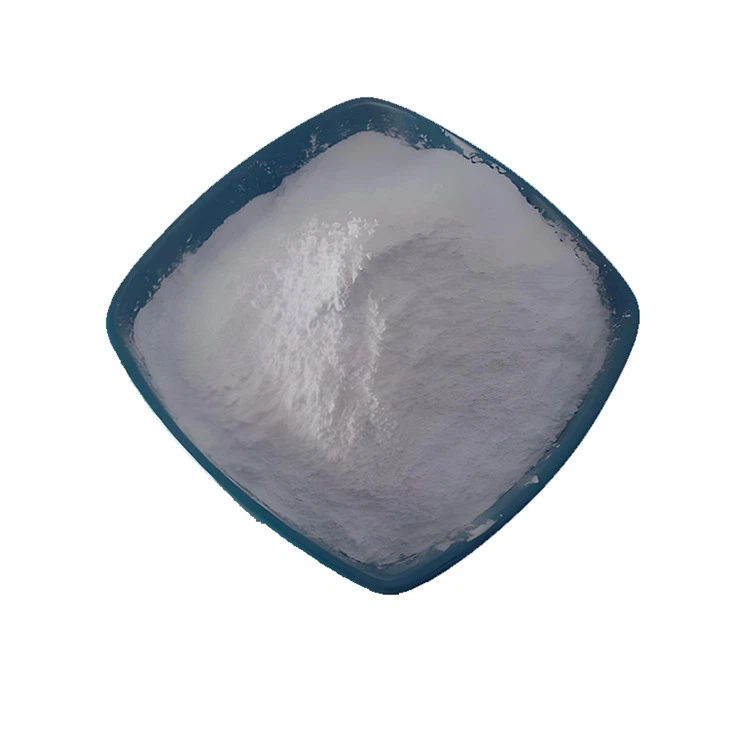

If you're in the market for Aluminum Hydroxide Filler to improve the flexural strength of your polymers, I'd love to hear from you. Whether you're in the rubber, flame retardancy, or composite insulator industry, I can provide you with the high-quality filler you need. Contact me to start a conversation about your requirements and let's see how we can work together to make your polymers stronger and more reliable.
References
- "Polymer Composites: Principles and Applications" by Mohamed Naguib
- "Handbook of Fillers and Reinforcements for Plastics" by Harry Katz and John Milewski


