


In the realm of Pressure Swing Adsorption (PSA) technology, activated alumina PSA adsorbents play a pivotal role. As a dedicated supplier of activated alumina PSA adsorbents, I understand the significance of evaluating the quality of these adsorbents. This blog post aims to provide a comprehensive guide on how to assess the quality of activated alumina PSA adsorbents, which is crucial for both end - users and those in the industry.
1. Physical Properties
Particle Size and Shape
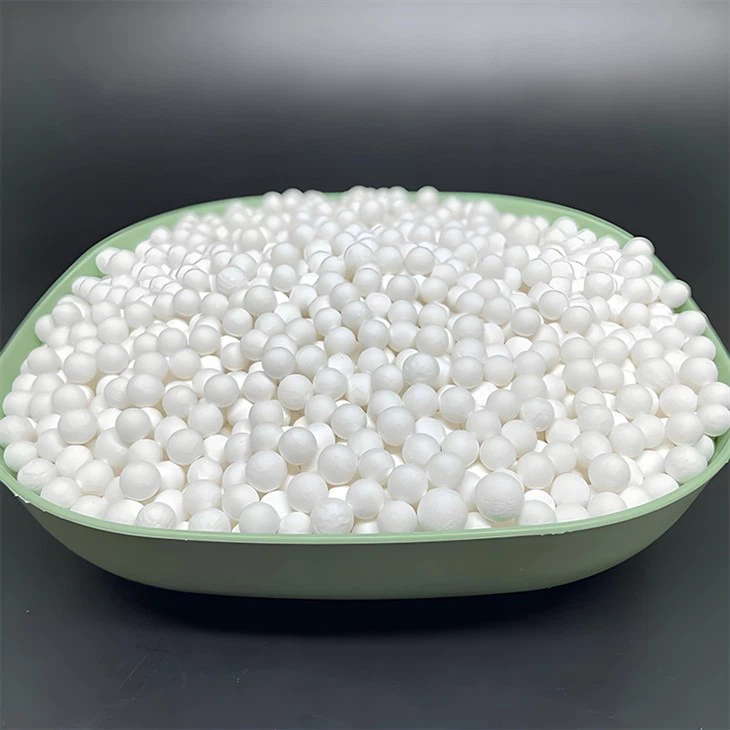
The particle size of activated alumina PSA adsorbents is a fundamental physical property. A uniform particle size distribution is highly desirable. Large variations in particle size can lead to uneven flow distribution within the PSA system. Smaller particles may cause higher pressure drops, while larger particles may not provide sufficient surface area for adsorption. The shape of the particles also matters. Spherical particles, for example, offer better packing characteristics and lower pressure drops compared to irregularly shaped particles.
Bulk Density
Bulk density is another important physical property. It is defined as the mass of the adsorbent per unit volume. A consistent bulk density indicates a uniform manufacturing process. Higher bulk density can mean more adsorbent material in a given volume, potentially increasing the adsorption capacity. However, if the bulk density is too high, it may reduce the porosity of the adsorbent, limiting the access of gas molecules to the internal surface area.
Hardness and Abrasion Resistance
Activated alumina PSA adsorbents need to withstand the mechanical stress during the PSA process. High hardness and abrasion resistance are essential to prevent particle breakage. Broken particles can lead to increased pressure drops, fouling of downstream equipment, and a decrease in the overall efficiency of the PSA system. To evaluate the hardness and abrasion resistance, tests such as the attrition test can be conducted. In this test, the adsorbent is subjected to a specific amount of mechanical agitation, and the amount of fines generated is measured.
2. Chemical Properties
Purity
The purity of activated alumina PSA adsorbents is critical. Impurities can have a negative impact on the adsorption performance. For example, metal impurities may catalyze unwanted chemical reactions or block the adsorption sites. High - purity activated alumina ensures that the adsorbent can effectively adsorb the target gases without interference from other substances. Analytical techniques such as X - ray fluorescence (XRF) can be used to determine the elemental composition and purity of the adsorbent.
Surface Area and Pore Structure
The surface area and pore structure of activated alumina PSA adsorbents are directly related to their adsorption capacity. A large surface area provides more sites for gas molecules to adsorb. The pore size distribution is also important. Different gases have different molecular sizes, and the adsorbent should have an appropriate pore size to accommodate the target gas molecules. For example, for the separation of oxygen and nitrogen in air separation applications, the adsorbent needs to have pores that can selectively adsorb nitrogen. Techniques like Brunauer - Emmett - Teller (BET) analysis are commonly used to measure the surface area, and mercury intrusion porosimetry can be used to analyze the pore size distribution.
Adsorption Capacity
The adsorption capacity is a key indicator of the quality of activated alumina PSA adsorbents. It is defined as the amount of gas that the adsorbent can adsorb under specific conditions. The adsorption capacity can be measured through equilibrium adsorption experiments. These experiments involve exposing the adsorbent to a known concentration of the target gas at a constant temperature and pressure and measuring the amount of gas adsorbed. The adsorption capacity is influenced by factors such as the surface area, pore structure, and chemical composition of the adsorbent.
3. Adsorption Kinetics
Adsorption Rate
The adsorption rate is an important aspect of the performance of activated alumina PSA adsorbents. A fast adsorption rate allows for a shorter cycle time in the PSA process, increasing the overall efficiency of the system. The adsorption rate is affected by factors such as the pore diffusion rate, surface diffusion rate, and the affinity between the adsorbent and the gas molecules. To evaluate the adsorption rate, dynamic adsorption experiments can be conducted. In these experiments, the adsorbent is exposed to a flowing gas stream, and the change in the gas concentration over time is measured.
Desorption Rate
In addition to the adsorption rate, the desorption rate is also crucial. A fast desorption rate is necessary for the regeneration of the adsorbent in the PSA process. If the desorption rate is slow, it may require more energy and time to regenerate the adsorbent, reducing the efficiency of the system. Similar to the adsorption rate, the desorption rate can be evaluated through dynamic desorption experiments.
4. Thermal and Chemical Stability
Thermal Stability
Activated alumina PSA adsorbents need to be thermally stable during the PSA process. The temperature can vary significantly during adsorption and desorption cycles. A thermally stable adsorbent can maintain its structure and performance under these temperature variations. To evaluate the thermal stability, thermogravimetric analysis (TGA) can be used. This technique measures the weight change of the adsorbent as a function of temperature, allowing us to determine the temperature range within which the adsorbent is stable.
Chemical Stability
The adsorbent should also be chemically stable in the presence of the gases and other substances in the PSA system. It should not react with the target gases or other components in the gas stream. Chemical stability can be evaluated through exposure tests, where the adsorbent is exposed to the relevant gases and chemicals for a certain period of time, and its physical and chemical properties are then analyzed.
5. Compatibility with PSA Systems
Compatibility with Process Conditions
Activated alumina PSA adsorbents need to be compatible with the specific process conditions of the PSA system. This includes factors such as the pressure, temperature, gas composition, and humidity. For example, in some applications, the gas stream may contain moisture, and the adsorbent should be able to withstand the presence of water without significant loss of performance.
Compatibility with Other Adsorbents
In some PSA systems, multiple adsorbents may be used in combination. The activated alumina PSA adsorbent should be compatible with other adsorbents in the system. Compatibility issues can lead to reduced adsorption performance, fouling, or other problems. To evaluate the compatibility, co - adsorption experiments can be conducted, where the activated alumina is used in combination with other adsorbents, and the overall adsorption performance is measured.

Product Recommendations
As a supplier, I would like to introduce some of our high - quality activated alumina PSA adsorbents. Our Alumina Desiccant for Air Separation is specifically designed for air separation applications. It has a high adsorption capacity for moisture and carbon dioxide, which are common impurities in air. Our Activated Alumina Powder offers a large surface area and can be used in various PSA processes. And our Activated Alumina Balls for Hydrogen Peroxide are suitable for the purification of hydrogen peroxide, with excellent adsorption and catalytic properties.
Conclusion
Evaluating the quality of activated alumina PSA adsorbents is a multi - faceted process that involves assessing physical, chemical, kinetic, and stability properties, as well as compatibility with PSA systems. By carefully evaluating these aspects, end - users can select the most suitable adsorbent for their specific applications. As a supplier, we are committed to providing high - quality activated alumina PSA adsorbents that meet the strictest quality standards. If you are interested in purchasing our products or have any questions about activated alumina PSA adsorbents, please feel free to contact us for further discussion and procurement negotiation.
References
- Ruthven, D. M., Farooq, S., & Knaebel, K. S. (1994). Pressure Swing Adsorption. John Wiley & Sons.
- Yang, R. T. (2003). Gas Separation by Adsorption Processes. World Scientific.
- Gregg, S. J., & Sing, K. S. W. (1982). Adsorption, Surface Area and Porosity. Academic Press.


