


Hey there! As a supplier of Claus Sulfur Recovery Catalyst Carrier, I've been diving deep into the industry for quite a while. One question that often pops up is how the scale of the sulfur recovery unit affects the choice of Claus Sulfur Recovery Catalyst Carrier. Well, let's break it down.
First off, we need to understand what a Claus Sulfur Recovery Unit (SRU) is. It's a crucial part of many industrial processes, especially in the oil and gas sector. The main job of an SRU is to convert hydrogen sulfide (H2S) into elemental sulfur. And that's where our catalyst carriers come in. They provide a surface for the chemical reactions to take place, helping to speed up the conversion process.
Now, let's talk about scale. The scale of an SRU can vary widely, from small units in niche chemical plants to large - scale operations in major refineries. And this scale has a big impact on the choice of catalyst carrier.
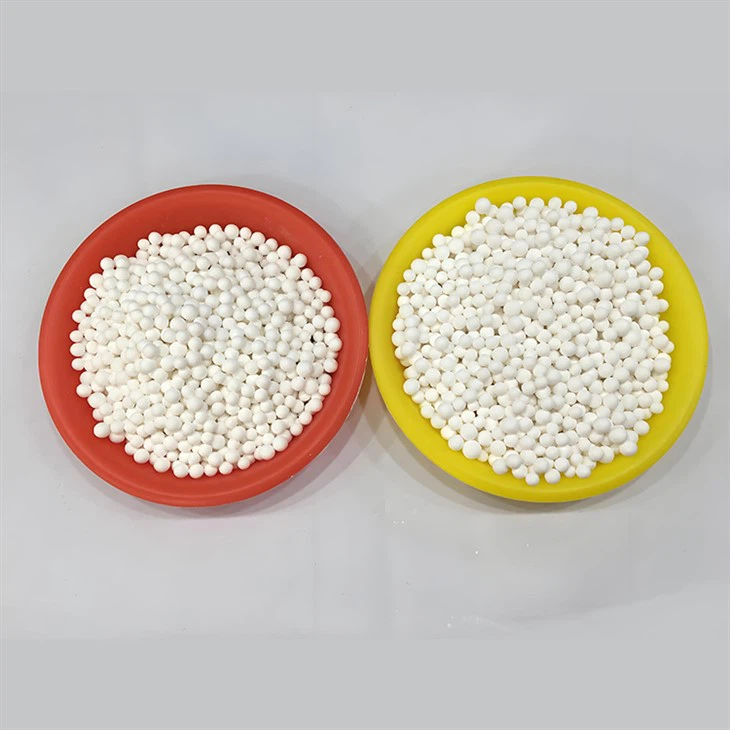

Small - scale Sulfur Recovery Units
For small - scale SRUs, cost is often a major factor. These operations usually have limited budgets and can't afford to splurge on high - end catalyst carriers. They need something that is cost - effective without sacrificing too much in terms of performance.
One option for small - scale units is a Potassium Permanganate Alumina Adsorbent Ball. These balls are relatively inexpensive to produce and can provide a decent surface area for the Claus reactions. They are also quite durable, which means they don't need to be replaced too often. This is great for small - scale operations that can't afford frequent shutdowns for catalyst replacement.
Another consideration for small - scale SRUs is the simplicity of the catalyst carrier. They may not have the sophisticated equipment or highly trained staff to handle complex catalyst systems. So, a catalyst carrier that is easy to install, operate, and maintain is ideal. Simple alumina - based carriers fit the bill perfectly. They are well - understood in the industry and can be easily integrated into small - scale units.
However, small - scale SRUs also have their limitations. They often operate at lower throughputs, which means the reaction conditions can be less stable. The catalyst carrier needs to be able to handle these fluctuations in temperature, pressure, and gas composition. Some carriers may be more sensitive to these changes, so it's important to choose one that is robust.
Medium - scale Sulfur Recovery Units
Medium - scale SRUs are in a bit of a sweet spot. They have more resources than small - scale units but still need to be cost - conscious. At this scale, performance becomes a more significant factor.
CO - MO System Sulfur - tolerant Shift Catalyst Carrier can be a great choice for medium - scale SRUs. These carriers are designed to work well under a wider range of conditions. They can handle higher throughputs and more complex gas mixtures compared to some of the carriers used in small - scale units.
The surface area of the catalyst carrier also becomes more important at this scale. A larger surface area means more active sites for the chemical reactions to occur, which can lead to higher sulfur recovery efficiency. Medium - scale SRUs may also be more likely to invest in carriers that can be regenerated. This not only reduces long - term costs but also helps to minimize waste.
In addition, medium - scale units may have more flexibility in terms of process optimization. They can afford to experiment with different catalyst carriers and operating conditions to find the best combination for their specific needs. This allows them to fine - tune their sulfur recovery process and improve overall performance.
Large - scale Sulfur Recovery Units
Large - scale SRUs are the giants of the industry. They process huge volumes of hydrogen sulfide and require the highest levels of performance and reliability.
For these large - scale operations, Claus Sulfur Recovery Catalyst Carrier specifically designed for high - throughput applications are a must. These carriers are engineered to handle extremely high gas flow rates and maintain consistent performance over long periods of time.
The durability of the catalyst carrier is of utmost importance in large - scale SRUs. A breakdown in the catalyst system can lead to significant production losses and costly downtime. So, carriers made from high - quality materials that can withstand the harsh operating conditions are preferred.
Large - scale units also have the resources to invest in advanced catalyst technologies. For example, they may use carriers with special coatings or additives that can enhance the catalytic activity and selectivity. These advanced carriers can help to achieve very high sulfur recovery rates, which is crucial for meeting environmental regulations and maximizing profitability.
Another aspect to consider in large - scale SRUs is the integration with other parts of the refinery or chemical plant. The catalyst carrier needs to be compatible with the overall process flow and other equipment. This ensures a seamless operation and reduces the risk of any bottlenecks or inefficiencies.
Other Factors to Consider
Besides the scale of the SRU, there are other factors that can influence the choice of catalyst carrier. The composition of the feed gas is one such factor. If the feed gas contains high levels of impurities, the catalyst carrier needs to be able to resist poisoning. Some carriers are more resistant to certain impurities than others, so this needs to be taken into account.
The operating temperature and pressure of the SRU also play a role. Different catalyst carriers have different optimal operating conditions. For example, some carriers may work better at higher temperatures, while others are more suitable for lower - temperature operations.
In conclusion, the scale of the sulfur recovery unit has a profound impact on the choice of Claus Sulfur Recovery Catalyst Carrier. Whether it's a small - scale, medium - scale, or large - scale operation, there are specific requirements that need to be met. As a supplier, I'm always here to help you find the right catalyst carrier for your needs. If you're in the market for a Claus Sulfur Recovery Catalyst Carrier or have any questions about how to choose the best one for your SRU, don't hesitate to reach out for a chat. We can have a detailed discussion and figure out the most suitable solution for your specific situation.
References
- Smith, J. (2018). "Catalyst Selection in Sulfur Recovery Units". Chemical Engineering Journal.
- Johnson, A. (2019). "Impact of Scale on Industrial Catalyst Performance". Industrial Catalysis Review.
- Brown, C. (2020). "Advances in Claus Sulfur Recovery Technology". Petroleum Processing Magazine.


