


Hey there! As a supplier of Activated Alumina PSA Adsorbent, I've seen firsthand how the quality of raw materials can make or break the performance of these adsorbents. In this blog post, I'll share my insights on how raw material quality affects the performance of Activated Alumina PSA Adsorbent and why it's crucial to choose the right raw materials for your applications.
What is Activated Alumina PSA Adsorbent?
Before we dive into the impact of raw material quality, let's quickly go over what Activated Alumina PSA Adsorbent is. PSA stands for Pressure Swing Adsorption, a process used to separate gases based on their adsorption properties. Activated Alumina PSA Adsorbent is a type of adsorbent material that is commonly used in PSA systems to remove impurities and moisture from gases.
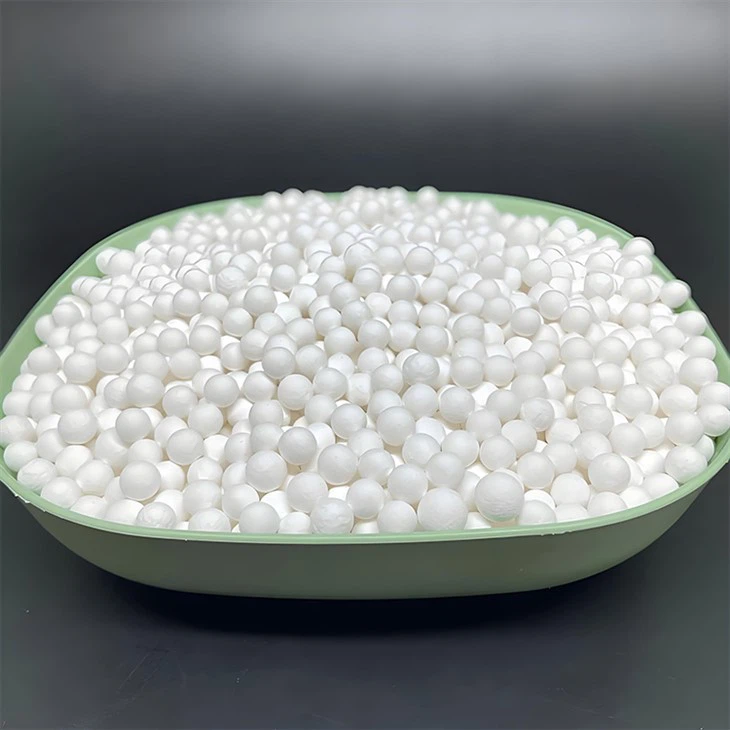
It has a high surface area and a porous structure, which allows it to adsorb a large amount of gas molecules. This makes it an ideal choice for applications such as air separation, hydrogen purification, and natural gas treatment. You can check out our Activated Alumina PSA Adsorbent for more details on its specific features and applications.
The Role of Raw Materials in Activated Alumina PSA Adsorbent
The performance of Activated Alumina PSA Adsorbent is largely determined by the quality of the raw materials used in its production. The main raw material for activated alumina is aluminum hydroxide, which is then calcined to form activated alumina. The quality of the aluminum hydroxide can vary depending on its source and the manufacturing process.
High-quality aluminum hydroxide has a high purity level and a consistent particle size distribution. This ensures that the activated alumina produced from it has a uniform pore structure and a high surface area, which are essential for good adsorption performance. On the other hand, low-quality aluminum hydroxide may contain impurities and have an irregular particle size distribution, which can lead to a lower surface area and a less efficient adsorption process.
Impact of Raw Material Quality on Adsorption Capacity
One of the most important performance indicators of Activated Alumina PSA Adsorbent is its adsorption capacity, which refers to the amount of gas molecules that the adsorbent can adsorb. The quality of the raw materials can have a significant impact on the adsorption capacity of the adsorbent.
High-quality raw materials result in an adsorbent with a larger surface area and a more uniform pore structure. This allows the adsorbent to adsorb more gas molecules and have a higher adsorption capacity. For example, if you're using Activated Alumina PSA Adsorbent for air separation, a high-quality adsorbent can remove more moisture and impurities from the air, resulting in a higher purity of the separated gases.
In contrast, low-quality raw materials can lead to an adsorbent with a smaller surface area and a less uniform pore structure. This reduces the adsorption capacity of the adsorbent and makes it less effective in removing impurities from gases. So, if you want to achieve high adsorption performance, it's crucial to choose high-quality raw materials for your Activated Alumina PSA Adsorbent.
Impact of Raw Material Quality on Selectivity
Selectivity is another important performance indicator of Activated Alumina PSA Adsorbent. It refers to the ability of the adsorbent to selectively adsorb certain gas molecules while leaving others unaffected. The quality of the raw materials can also affect the selectivity of the adsorbent.
High-quality raw materials can be used to produce an adsorbent with a specific pore size and surface chemistry, which allows it to selectively adsorb certain gas molecules. For example, if you're using Activated Alumina PSA Adsorbent for hydrogen purification, a high-quality adsorbent can selectively adsorb impurities such as water, carbon dioxide, and oxygen while leaving hydrogen gas unaffected.
On the other hand, low-quality raw materials may result in an adsorbent with a less specific pore size and surface chemistry, which reduces its selectivity. This means that the adsorbent may adsorb not only the target gas molecules but also other unwanted gas molecules, leading to a lower purity of the separated gases.
Impact of Raw Material Quality on Regeneration Efficiency
Regeneration is an important process in PSA systems, as it allows the adsorbent to be reused after it has reached its adsorption capacity. The quality of the raw materials can also affect the regeneration efficiency of the Activated Alumina PSA Adsorbent.
High-quality raw materials result in an adsorbent with a stable pore structure and a high thermal stability. This allows the adsorbent to be regenerated more easily and efficiently, without losing its adsorption performance. For example, if you're using Activated Alumina PSA Adsorbent for air separation, a high-quality adsorbent can be regenerated at a lower temperature and in a shorter time, which reduces the energy consumption and operating costs of the PSA system.
In contrast, low-quality raw materials can lead to an adsorbent with a less stable pore structure and a lower thermal stability. This makes it more difficult to regenerate the adsorbent and may result in a loss of its adsorption performance over time. So, if you want to ensure the long-term performance and efficiency of your PSA system, it's important to choose high-quality raw materials for your Activated Alumina PSA Adsorbent.
Other Applications of Activated Alumina
Activated Alumina has a wide range of applications beyond PSA systems. For example, our Activated Alumina Balls for Hydrogen Peroxide are specifically designed for use in the hydrogen peroxide production process. They can effectively remove impurities and stabilize the hydrogen peroxide solution.
Our Alumina Adsorbent for Liquid Crystal is used in the liquid crystal display industry to remove moisture and impurities from the liquid crystal materials, ensuring the high quality of the displays.
The Alumina Desiccant for Air Separation is also an important product, which can efficiently remove moisture from the air in air separation units, improving the separation efficiency and product quality.
And our Activated Alumina Defluorination Agent is used to remove fluoride from water, making it suitable for drinking and industrial applications.
Conclusion and Call to Action
In conclusion, the quality of the raw materials used in the production of Activated Alumina PSA Adsorbent has a significant impact on its performance. High-quality raw materials result in an adsorbent with a high adsorption capacity, good selectivity, and high regeneration efficiency, while low-quality raw materials can lead to a less effective adsorbent.

If you're in the market for Activated Alumina PSA Adsorbent or any of our other activated alumina products, I encourage you to contact us for a detailed discussion. We can provide you with high-quality products that meet your specific requirements and help you achieve the best performance in your applications. Don't hesitate to reach out and start a conversation about your needs!
References
- [1] "Activated Alumina: Properties and Applications", Journal of Adsorption Science and Technology
- [2] "Pressure Swing Adsorption: Principles and Applications", Chemical Engineering Journal


