


Hey there! As a supplier of activated alumina adsorbent, I often get asked whether our product can be used in the catalyst carrier field. Well, let's dig into this topic and find out.
First off, let's understand what activated alumina adsorbent is. It's a highly porous form of aluminum oxide with a large surface area. This unique property makes it an excellent adsorbent for a wide range of applications, such as removing moisture, fluoride, and other impurities from gases and liquids. We offer different types of activated alumina adsorbents on our website, like Alumina Adsorbent for Liquid Crystal, Activated Alumina Defluorination Agent, and Activated Alumina Powder.
Now, let's talk about catalyst carriers. A catalyst carrier is a material that provides a support structure for a catalyst. It helps to disperse the catalyst evenly, increase its surface area, and improve its stability and activity. The ideal catalyst carrier should have high porosity, good mechanical strength, thermal stability, and chemical inertness.
So, can activated alumina adsorbent meet these requirements? The answer is yes! Activated alumina has several properties that make it a great candidate for catalyst carriers.
High Porosity
One of the key advantages of activated alumina is its high porosity. It has a network of pores with different sizes, which can provide a large surface area for the catalyst to be deposited on. This increased surface area allows for more active sites on the catalyst, which in turn enhances its catalytic activity. For example, in some chemical reactions, a higher surface area catalyst can lead to faster reaction rates and better yields.
Good Mechanical Strength
Catalyst carriers need to withstand the mechanical stresses during the reaction process, such as stirring, fluid flow, and pressure changes. Activated alumina has good mechanical strength, which means it can maintain its shape and structure under these conditions. This ensures that the catalyst remains firmly attached to the carrier and doesn't break down or lose its activity over time.
Thermal Stability
Many catalytic reactions occur at high temperatures. Therefore, the catalyst carrier needs to be thermally stable to prevent it from degrading or changing its properties. Activated alumina has excellent thermal stability, which allows it to maintain its structure and performance even at elevated temperatures. This makes it suitable for a wide range of high-temperature catalytic processes.

Chemical Inertness
The catalyst carrier should be chemically inert to avoid reacting with the reactants or products in the catalytic reaction. Activated alumina is relatively inert, which means it won't interfere with the chemical reactions taking place on the catalyst surface. This helps to ensure the purity of the reaction products and the stability of the catalyst.
Applications in the Catalyst Carrier Field
Activated alumina is already widely used as a catalyst carrier in various industries. Here are some examples:
Petrochemical Industry
In the petrochemical industry, activated alumina is used as a carrier for catalysts in processes such as hydrocracking, hydrotreating, and reforming. These catalysts help to break down large hydrocarbon molecules into smaller ones, remove impurities, and improve the quality of fuels.
Environmental Protection
Activated alumina-supported catalysts are also used in environmental protection applications, such as the removal of nitrogen oxides (NOx) and volatile organic compounds (VOCs) from industrial exhaust gases. These catalysts can convert these pollutants into less harmful substances, helping to reduce air pollution.
Chemical Synthesis
In chemical synthesis, activated alumina carriers are used for catalysts in reactions such as oxidation, hydrogenation, and dehydrogenation. These reactions are important for the production of various chemicals, including plastics, pharmaceuticals, and fertilizers.
Our Activated Alumina Adsorbents for Catalyst Carriers
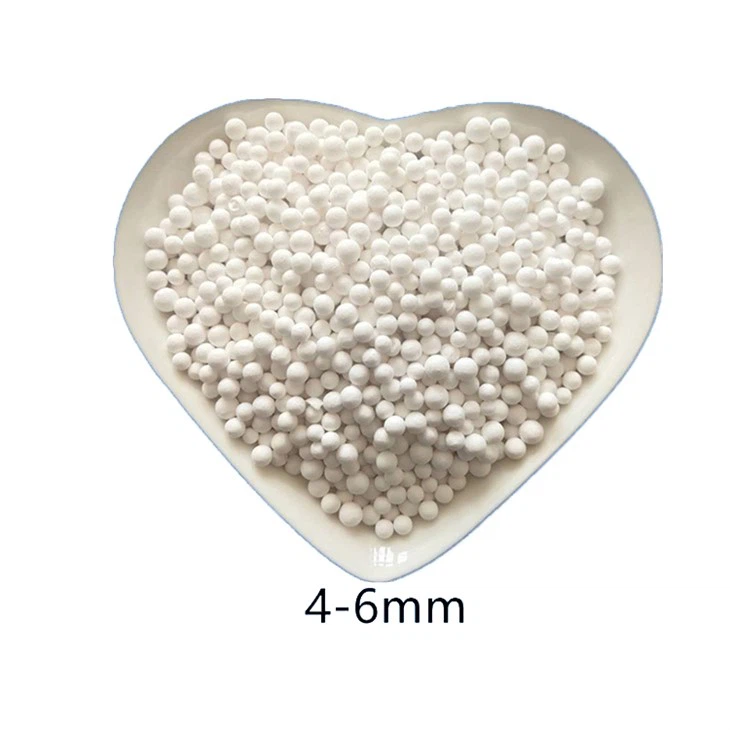
As a supplier of activated alumina adsorbent, we offer a range of products that are suitable for catalyst carrier applications. Our products are carefully manufactured to ensure high quality and consistent performance. We can also customize the properties of our activated alumina, such as porosity, surface area, and particle size, to meet the specific requirements of different catalyst systems.
If you're in the market for a reliable catalyst carrier, our activated alumina adsorbents could be the perfect choice for you. Whether you're working in the petrochemical industry, environmental protection, or chemical synthesis, we have the right product to meet your needs.
Conclusion
In conclusion, activated alumina adsorbent can definitely be used in the catalyst carrier field. Its high porosity, good mechanical strength, thermal stability, and chemical inertness make it an ideal material for supporting catalysts in a wide range of applications. If you're interested in using our activated alumina adsorbents for your catalyst carrier needs, don't hesitate to get in touch with us. We're always happy to discuss your requirements and provide you with the best solutions.
If you have any questions or want to start a procurement discussion, feel free to reach out. We look forward to working with you!
References
- "Catalyst Supports and Supported Catalysts: Principles, New Approaches, and Strategies" by J. A. Moulijn, P. W. J. M. van den Berg, and F. Kapteijn.
- "Activated Alumina: Properties, Applications, and Production" by various authors in relevant chemical engineering journals.


