


Hey there! As a supplier of Activated Alumina Powder, I often get asked about its adsorption capacity. So, let's dive right into it and explore what makes this stuff so special.

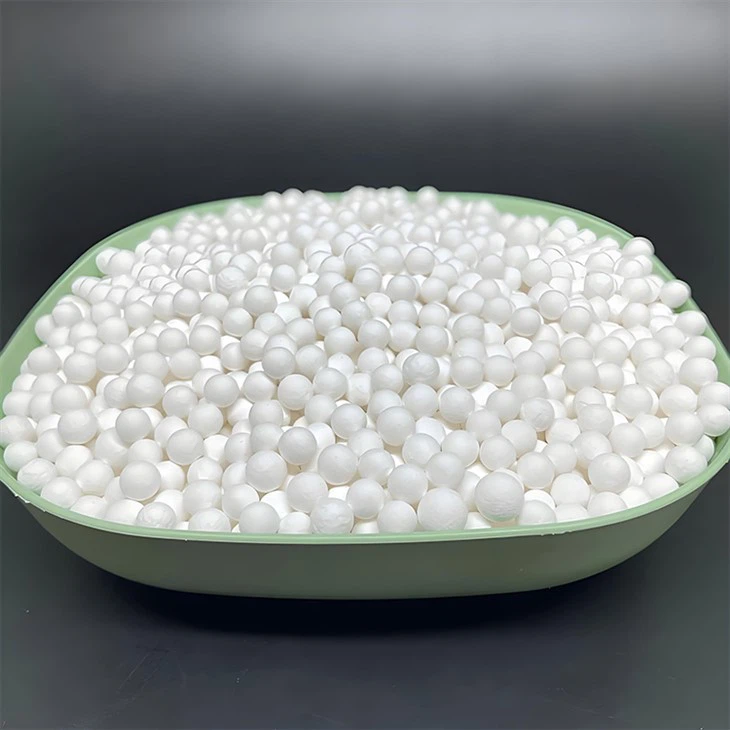
First off, what is activated alumina powder? It's a highly porous form of aluminum oxide that has a large surface area. This unique structure gives it excellent adsorption properties, which means it can attract and hold onto other substances on its surface. Think of it like a super sponge that can soak up all sorts of things.
One of the key factors that determine the adsorption capacity of activated alumina powder is its pore size distribution. Different substances have different molecular sizes, and the powder needs to have pores that are the right size to trap them. For example, if you're trying to adsorb small molecules like water vapor, you'll need a powder with lots of small pores. On the other hand, if you're dealing with larger molecules, like certain organic compounds, you'll need a powder with larger pores.
The surface chemistry of activated alumina powder also plays a crucial role in its adsorption capacity. The powder has a high surface charge, which allows it to interact with other charged or polar molecules. This electrostatic interaction helps to hold the adsorbed substances in place. Additionally, the powder can undergo chemical reactions with some substances, further enhancing its adsorption ability.
Now, let's talk about some of the common applications of activated alumina powder and how its adsorption capacity comes into play.
Water Treatment
One of the most widespread uses of activated alumina powder is in water treatment. It can be used to remove fluoride, arsenic, and other contaminants from drinking water. The powder's high adsorption capacity for these substances makes it an effective and reliable treatment option. For instance, the Activated Alumina Defluorination Agent is specifically designed to remove fluoride from water. It has a high affinity for fluoride ions, which allows it to effectively reduce the fluoride concentration in water to safe levels.
Gas Drying
Activated alumina powder is also commonly used for gas drying. It can adsorb water vapor from gases, making them dry and suitable for various industrial processes. The powder's large surface area and high adsorption capacity for water make it an ideal choice for this application. In air separation plants, for example, Alumina Desiccant for Air Separation is used to remove moisture from the air before it is separated into its components. This helps to prevent corrosion and damage to the equipment and ensures the quality of the separated gases.
Catalyst Support
In the chemical industry, activated alumina powder is often used as a catalyst support. It provides a large surface area for the catalyst to be dispersed on, which increases the catalyst's activity and efficiency. The powder's adsorption capacity also helps to hold the reactant molecules close to the catalyst surface, facilitating the chemical reactions. For example, in the production of hydrogen peroxide, Activated Alumina Balls for Hydrogen Peroxide are used as a catalyst support to enhance the reaction rate and yield.
So, how do you measure the adsorption capacity of activated alumina powder? There are several methods available, but one of the most common is the BET (Brunauer - Emmett - Teller) method. This method measures the specific surface area of the powder, which is directly related to its adsorption capacity. The higher the specific surface area, the greater the adsorption capacity. Another method is the adsorption isotherm measurement, which determines the amount of a substance adsorbed by the powder at different equilibrium pressures or concentrations.
It's important to note that the adsorption capacity of activated alumina powder can be affected by several factors, such as temperature, humidity, and the presence of other substances. For example, at higher temperatures, the adsorption capacity may decrease because the adsorbed substances are more likely to desorb. Similarly, the presence of other competing substances can reduce the powder's ability to adsorb the target substance.
As a supplier of activated alumina powder, I understand the importance of providing high - quality products with consistent adsorption capacity. We use advanced manufacturing processes to ensure that our powder has a uniform pore size distribution and a high surface area. We also conduct rigorous quality control tests to make sure that the adsorption capacity meets the specified requirements.
If you're in the market for activated alumina powder for your specific application, whether it's water treatment, gas drying, or catalyst support, I'd love to have a chat with you. We can discuss your requirements in detail and find the best solution for you. Our team of experts is always ready to provide technical support and advice to help you get the most out of our products.
In conclusion, the adsorption capacity of activated alumina powder is a result of its unique pore structure, surface chemistry, and physical properties. It has a wide range of applications in various industries, thanks to its ability to adsorb different substances effectively. If you have any questions or are interested in purchasing our activated alumina powder, don't hesitate to reach out. Let's work together to find the perfect solution for your needs.
References
- Snoeyink, V. L., & Jenkins, D. (1980). Water chemistry. John Wiley & Sons.
- Yang, R. T. (1987). Gas separation by adsorption processes. Butterworths.
- Thomas, C. L. (1997). Catalytic processes and proven catalysts. Academic Press.


