


In the field of gas purification, the removal of heavy metal ions is a crucial task for ensuring environmental safety and the quality of industrial processes. As a leading supplier of Activated Alumina PSA Adsorbent, I am excited to delve into the mechanism of how our product effectively adsorbs heavy metal ions in gas.
The Basics of Activated Alumina PSA Adsorbent
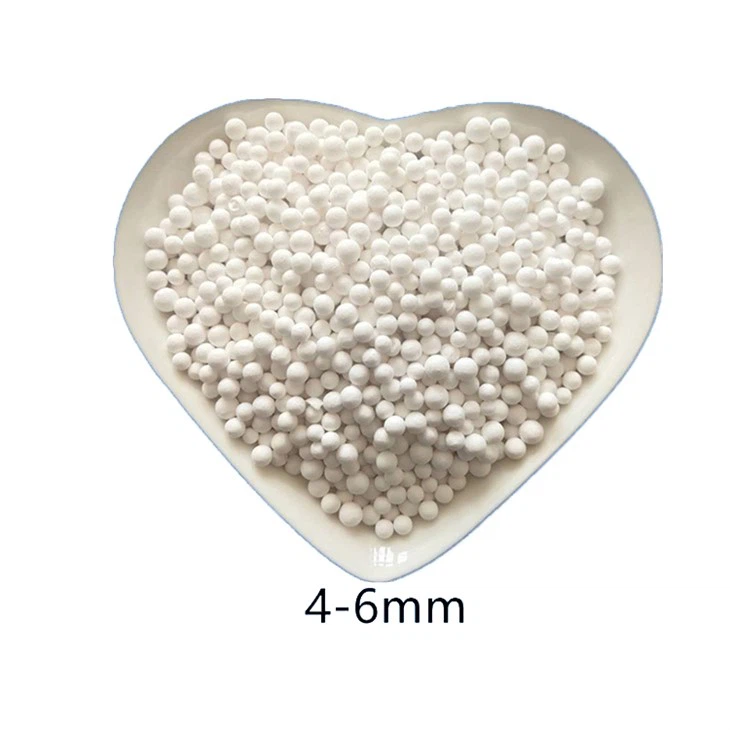
Activated Alumina PSA Adsorbent is a highly porous material with a large surface area, which makes it an excellent candidate for adsorption applications. It is produced through a special activation process that creates a network of pores and channels within the alumina structure. These pores can range in size from micropores (less than 2 nm) to mesopores (2 - 50 nm), providing a vast surface area for the interaction with gas molecules and heavy metal ions.
The high surface area of activated alumina is typically in the range of 200 - 400 m²/g, which allows for a large number of adsorption sites. This property is essential for capturing heavy metal ions present in the gas phase. The surface of activated alumina is also rich in hydroxyl groups (-OH), which play a significant role in the adsorption process.
Adsorption Mechanisms of Heavy Metal Ions
Physical Adsorption
Physical adsorption, also known as physisorption, is the initial step in the adsorption of heavy metal ions by activated alumina PSA adsorbent. This process is primarily driven by van der Waals forces between the adsorbent surface and the heavy metal ions. Van der Waals forces are weak intermolecular forces that include London dispersion forces, dipole - dipole forces, and dipole - induced dipole forces.
When the gas containing heavy metal ions comes into contact with the activated alumina surface, the heavy metal ions are attracted to the surface due to these weak forces. The porous structure of activated alumina provides a large number of sites for the heavy metal ions to be physically adsorbed. The physical adsorption is relatively fast and reversible, meaning that the heavy metal ions can be desorbed from the surface under certain conditions, such as changes in temperature or pressure.
Chemical Adsorption
Chemical adsorption, or chemisorption, is a more specific and stronger interaction between the activated alumina surface and the heavy metal ions. In this process, chemical bonds are formed between the heavy metal ions and the functional groups on the activated alumina surface.
The hydroxyl groups on the surface of activated alumina can react with heavy metal ions through ion - exchange or complexation reactions. For example, in the presence of acidic or basic conditions, the hydroxyl groups can release a proton (H⁺) and form a negatively charged surface site. Heavy metal ions with a positive charge can then be attracted to these negatively charged sites and form chemical bonds.
Complexation reactions can also occur when the heavy metal ions coordinate with the oxygen atoms of the hydroxyl groups or other functional groups on the surface. This results in the formation of stable complexes, which are more difficult to desorb compared to physically adsorbed species.
Factors Affecting the Adsorption of Heavy Metal Ions
pH of the Gas Phase
The pH of the gas phase can significantly affect the adsorption of heavy metal ions by activated alumina PSA adsorbent. The surface charge of activated alumina is pH - dependent. At low pH values, the surface of activated alumina is positively charged due to the protonation of hydroxyl groups. This can lead to electrostatic repulsion between the positively charged surface and the heavy metal ions, reducing the adsorption efficiency.
At high pH values, the surface becomes negatively charged, which can enhance the adsorption of positively charged heavy metal ions through electrostatic attraction. However, at very high pH values, the heavy metal ions may form hydroxides and precipitate out of the gas phase, which can also affect the adsorption process.
Temperature
Temperature plays an important role in both physical and chemical adsorption. In physical adsorption, an increase in temperature generally decreases the adsorption capacity because the kinetic energy of the heavy metal ions increases, making it easier for them to overcome the weak van der Waals forces and desorb from the surface.
In chemical adsorption, the effect of temperature is more complex. An increase in temperature can increase the reaction rate of chemical adsorption, but it can also cause the decomposition of the chemical bonds formed between the heavy metal ions and the adsorbent surface. Therefore, there is an optimal temperature range for the adsorption of heavy metal ions by activated alumina PSA adsorbent.
Concentration of Heavy Metal Ions
The concentration of heavy metal ions in the gas phase also affects the adsorption process. At low concentrations, the adsorption capacity of activated alumina is usually proportional to the concentration of heavy metal ions. As the concentration increases, the adsorption sites on the surface of activated alumina gradually become saturated, and the adsorption capacity reaches a maximum value.
Applications of Activated Alumina PSA Adsorbent in Heavy Metal Ion Removal
Activated Alumina PSA Adsorbent has a wide range of applications in the removal of heavy metal ions from gas streams. It is commonly used in industries such as metal smelting, chemical manufacturing, and waste incineration, where heavy metal ions are often present in the exhaust gas.
In metal smelting processes, gases such as sulfur dioxide (SO₂) and nitrogen oxides (NOₓ) may also be present along with heavy metal ions. Activated alumina PSA adsorbent can selectively adsorb heavy metal ions while also having some adsorption capacity for other pollutants, making it a versatile material for gas purification.
In addition to industrial applications, activated alumina PSA adsorbent can also be used in environmental protection projects to remove heavy metal ions from the air in polluted areas. This helps to reduce the environmental impact of heavy metal pollution and protect human health.

Our Product Range
As a supplier of Activated Alumina PSA Adsorbent, we offer a variety of products to meet different customer needs. Our Activated Alumina Defluorination Agent is specifically designed for the removal of fluoride ions in addition to heavy metal ions. It has a high adsorption capacity and good selectivity for fluoride and heavy metal ions.
Our Alumina Desiccant for Air Separation is suitable for applications where both moisture and heavy metal ions need to be removed from the gas. It can effectively adsorb water vapor and heavy metal ions, ensuring the quality of the separated air.
We also provide Activated Alumina Balls for Hydrogen Peroxide, which can be used in the purification of hydrogen peroxide solutions and also has the ability to adsorb heavy metal ions in the gas phase during the production process.
Contact Us for Procurement and Negotiation
If you are interested in our Activated Alumina PSA Adsorbent products or have any questions about the adsorption of heavy metal ions in gas, please feel free to contact us. We are committed to providing high - quality products and professional technical support to meet your specific requirements. Our team of experts can help you choose the most suitable product for your application and provide detailed information on the adsorption process and performance.
References
- Huang, X., & Pan, B. (2015). Adsorption of heavy metal ions on activated alumina: A review. Journal of Environmental Sciences, 31, 1 - 11.
- Foo, K. Y., & Hameed, B. H. (2010). Insights into the modeling of adsorption isotherm systems. Chemical Engineering Journal, 156(1), 2 - 10.
- Yang, R. T. (2012). Gas Separation by Adsorption Processes. World Scientific Publishing Co. Pte. Ltd.


